A Conversation with Dr Eduardo Garza-Villarreal (OHBM 2026 Keynote Interview Series)
Interviewer: Zaki Alasmar
Editors: Simon Steinkamp, Ashley Tyrer
Dr. Eduardo Garza-Villarreal is an Assistant Professor at the Universidad Nacional Autónoma de México (UNAM) where he leads the Translational Neuropsychiatry and Neurotoxicology Lab and is the head of the Neuromodulation Unit at the Institute of Neurobiology, campus Juriquilla in Querétaro, Mexico. Dr. Garza-Villarreal completed his M.D. at the Universidad Autónoma de Nuevo León and both his Ph.D. and postdoctoral training in Neuroscience at the Center of Functionally Integrative Neuroscience (CFIN) at Aarhus University. He also conducted research at the University of Oxford (UK), the University of Helsinki (Finland), and McGill University (Canada).
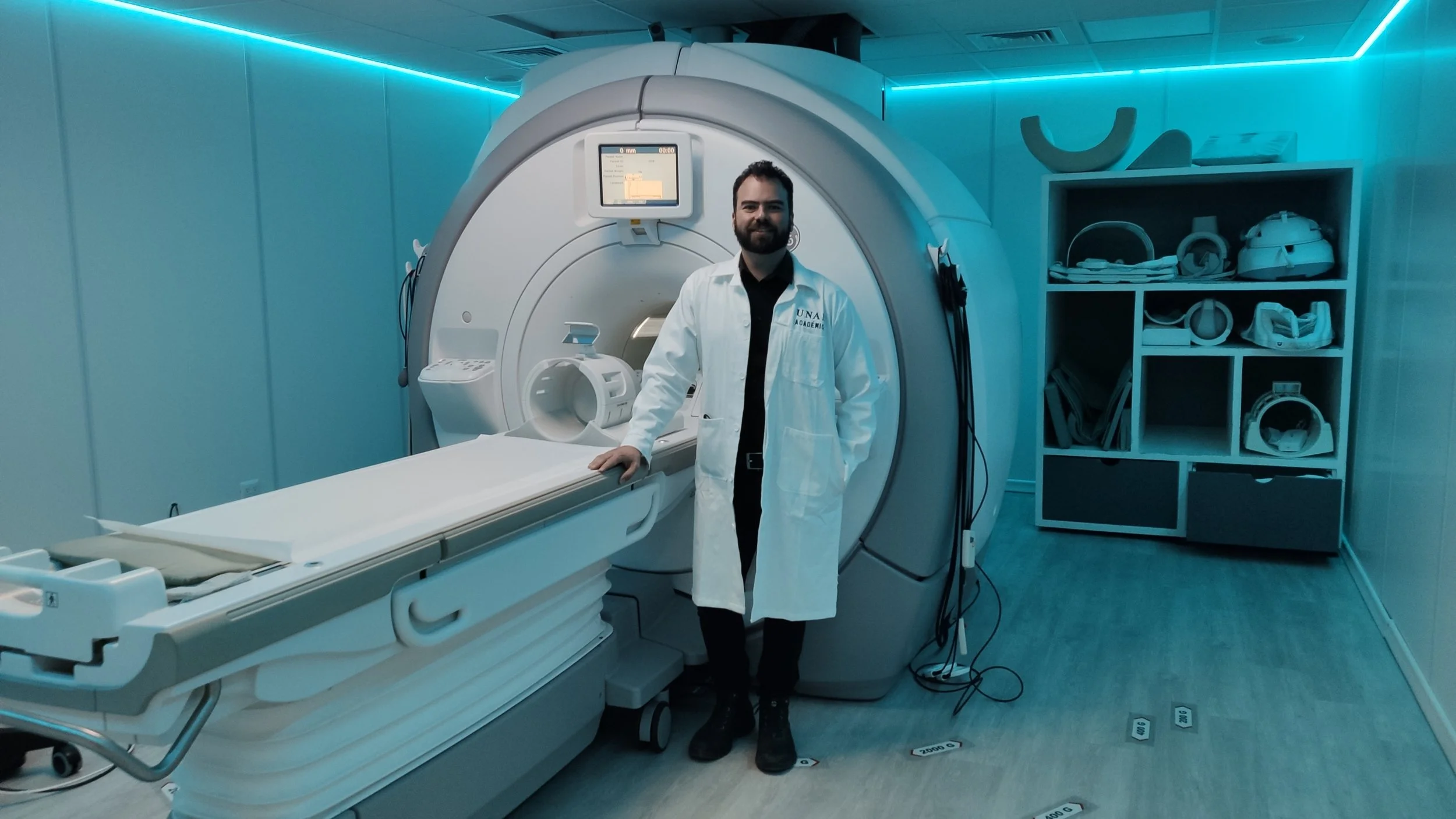
His research focuses on bridging the gap between basic neurobiology and clinical application in neuropsychiatry. By using MRI as a translational tool across species — working with both animal models and humans — his primary emphasis is on the brain circuits involved in substance use disorders and evaluating neuromodulation as a therapeutic strategy. His lab runs active clinical trials using transcranial magnetic stimulation as a promising intervention for medication-resistant substance use disorders, and his work spans neuroimaging biomarker identification, the neurotoxicology of addictive substances, and the analgesic effects of music on the brain. His research has been published in journals including Nature Scientific Data, Translational Psychiatry, and Biological Psychiatry: Cognitive Neuroscience and Neuroimaging. In addition to his research activities, Eduardo served as a member of the OHBM Communications Committee, is the new Chair of the Latin American Chapter, editor for Aperture Neuro, and has authored several science communication articles!
We had the privilege of speaking with Dr. Garza-Villarreal about his translational research program, his neuromodulation work, and his views on the future of neuropsychiatry and open science. You can find the video of the interview below: