Interview with Prof. Mac Shine, 2025 Winner of the Early Career Investigator Award
Author: Ashley Tyrer
Editor: Audrey Luo, Alfie Wearn
Video Editor: Xuqian Michelle Li
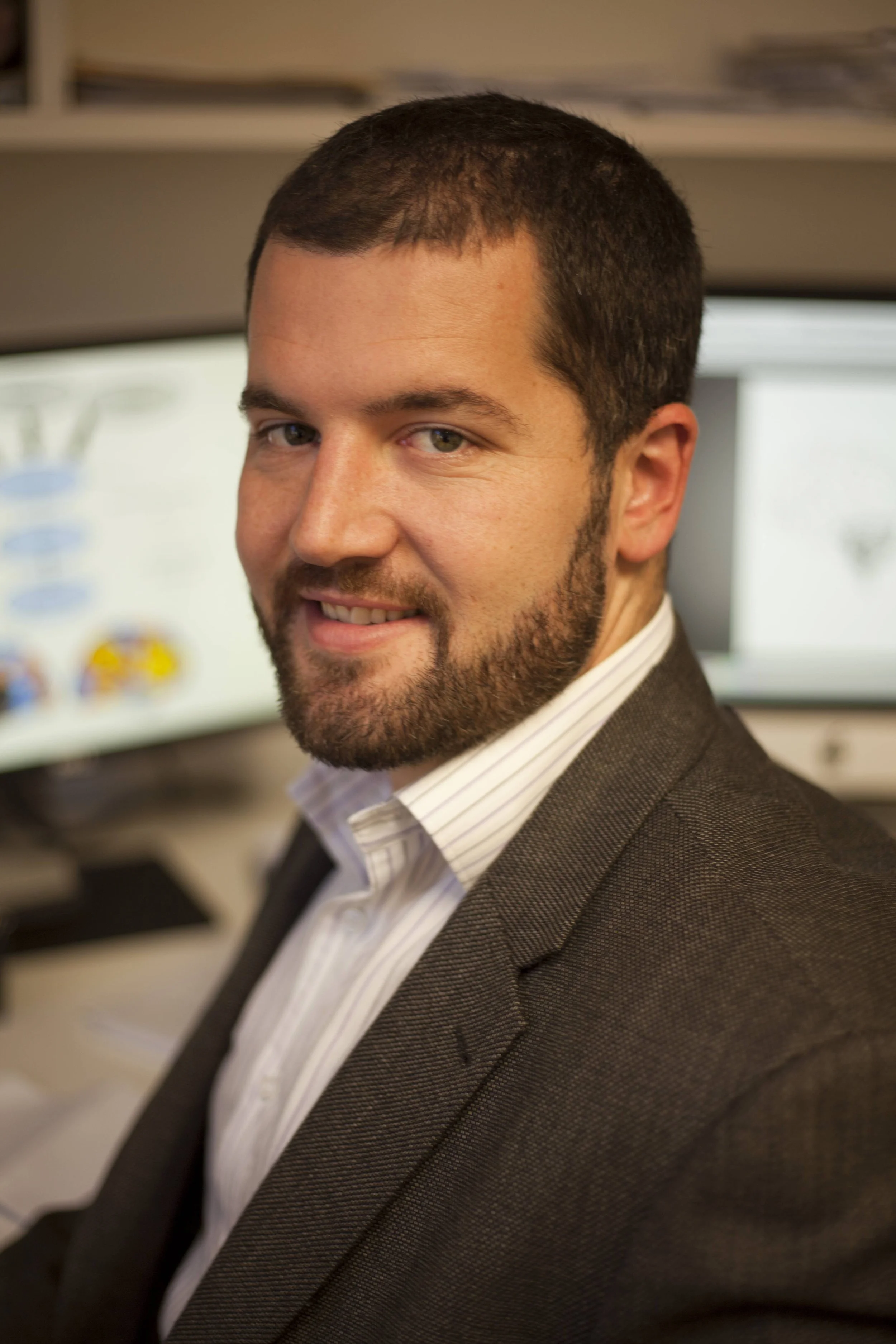
Dr. Mac Shine is the latest recipient of the OHBM Early Career Investigator Award, awarded at the 2025 annual meeting held in Brisbane, Australia. Dr. Shine is a Joint-NHMRC Emerging Leadership Fellow and Bellberry Fellow at the Brain and Mind Centre, University of Sydney, Australia. Dr. Shine completed his PhD in Cognitive Neuroscience at The University of Sydney, followed by a postdoctoral fellowship at Stanford University with Dr. Russell Poldrack. His research explores how different regions of the brain communicate to support cognition, combining functional neuroimaging and computational modelling to study the brain’s dynamic network architecture. He is particularly interested in how the ascending arousal system influences these networks, and how complex, macroscale brain dynamics arise from microscale neurobiological principles. With a background spanning biochemistry, medicine, and cognitive neuroscience, Dr. Shine now leads a systems neuroscience group at The University of Sydney which aims to integrate functional neuroimaging with dynamical systems theory.
The Early Career Investigator Award recognises Dr. Shine’s significant contributions to the field of human brain mapping. We had the honour of interviewing Dr. Shine in a new flash interview format, in which the interviewer asks quick-fire questions. In this interview, Dr. Shine discusses the challenges of scaling from microscale models of neuromodulation to whole-brain dynamics observed in human neuroimaging, as well as his greatest inspirations in the field.
You can find the video interview below. If you want to hear more from Dr. Shine, he also appeared on our Neurosalience podcast earlier this year, and also gave a keynote lecture at the 2024 annual OHBM meeting in Seoul, Korea, which you can watch here. Dr. Shine’s Keynote Interview with OHBM’s ComCom, in which he discusses his keynote lecture, can be found here.