A Conversation with Dr. Vitória Piai (OHBM 2026 Keynote Interview Series)
Interviewer: Anna Matsulevits
Editor: Zaki Alasmar
How does a thought become speech? For Dr. Vitória Piai, this question opens onto some of the deepest puzzles in cognitive neuroscience: how language draws on memory, attention, and motor control; what happens when brain damage disrupts fluent speech; and whether the categories we use to divide the mind into “language”, “memory”, or “executive control” are as clear-cut as they often appear in dusty textbooks.
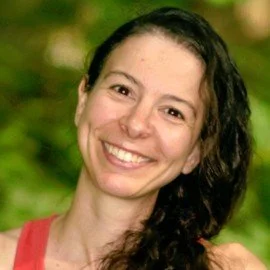
Dr. Piai is an Associate Professor and Principal Investigator at Radboud University and the Donders Institute for Brain, Cognition and Behaviour in Nijmegen, the Netherlands. Her research uses behavioural and electrophysiological methods to understand the neural bases of language in neurotypical speakers and in neurological populations, including people with stroke, brain tumours, and neurodegenerative disorders. She is especially interested in the intersection of language with other cognitive functions, such as attentional control, semantic memory, and motor control during speaking.
After completing her PhD in Cognitive Neuroscience at Radboud University and the Donders Institute in 2014, Dr. Piai moved to the University of California, Berkeley for her postdoctoral position, where she expanded her work to intracranial electrophysiology and acquired brain damage. She was deeply impressed by the way patient-based research was conducted overseas, and by the richness of working closely with people whose language abilities had been affected by brain damage. Shortly thereafter, a tenure-track position opened at Radboud for someone working precisely on this topic, and although she initially didn’t feel senior enough to apply, mentors and colleagues encouraged her to put herself forward, and she secured the position. Since 2017, she has led the “Language Function and Dysfunction” group, which focuses on how the brain supports language, especially how words are retrieved from memory during speaking and how these processes adapt after brain damage, constantly challenging simple separations between language and memory.
We spoke with Dr. Piai about language production, the language-memory interface, philosophy of neuroscience, mentorship, and what OHBM attendees can expect from her keynote. You can watch the interview below: