A Conversation with Professor Rogier Mars (OHBM 2026 Keynote Interview Series)
Author: Ashley Tyrer
Editor: Alfie Wearn
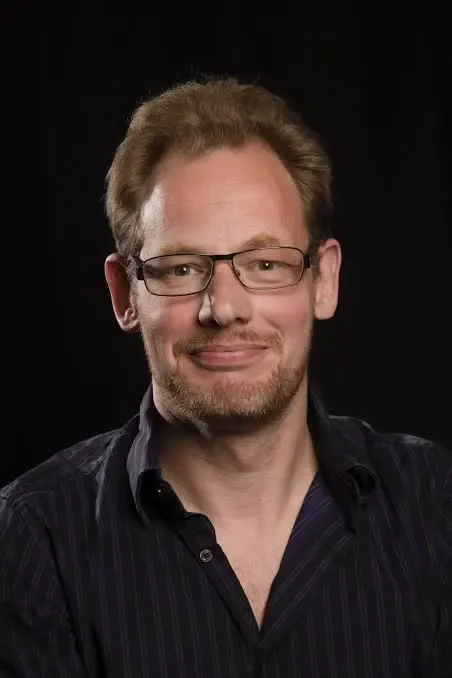
Rogier Mars is a Professor of Neurosciences at the Nuffield Department of Clinical Neurosciences, University of Oxford. His research focuses on differences in brain organisation across species, and how unique aspects of the human brain contribute to our behaviour. His lab, the Cognitive Neuroecology Lab, aims to create and apply tools for quantitative comparative neuroscience, to examine different species’ brain organisation, and study the neural basis of human uniqueness.
Prof Mars earned his PhD with highest honors from the Donders Centre of Radboud University in 2006, with a thesis on the contributions of the human premotor cortex to action. He then worked on computational models to analyse EEG and TMS data with Sven Bestmann, at University College London. Since 2007, Rogier has been working at the University of Oxford, initially as a Marie Curie Intra-European Fellow with Matthew Rushworth and then as an independent Principal Investigator.
We had the privilege of interviewing Prof Mars in advance of his Keynote Lecture at this year’s annual meeting. In this interview, he discusses his new book, ‘The Fox, The Shrew, and You’, the challenges that come with multi-species research, and the focus of his upcoming keynote lecture.
Ashley Tyrer (AT): Could you give us a brief summary of your academic journey for people who aren’t familiar with your work?
Rogier Mars (RM): Well, it’s been a bit of an unguided one. I did my PhD in the Netherlands in proper cognitive neuroscience, working on healthy human volunteers. My background is in psychology, working on decision-making. Then I got really interested in the way biologists think about the brain. In the UK, I found that cognitive neuroscience was more inspired by the biological sciences, so I wanted to do a postdoc in Oxford with Matthew Rushworth, via a brief detour at UCL. I went there and got interested in connectivity and brain stimulation work. Matthew’s lab at that time had also just started doing MRI scanning on macaque monkeys. There was a postdoc who was working with macaques, and I was the postdoc who knew about imaging. With a big team including lots of early career researchers, we got the monkey imaging to work.
It was fascinating to see a different brain coming out of that scanner, and over time that got me thinking: how can we use this high-throughput method that can quickly give you a lot of anatomical information about a brain as a tool to look at many brains? Mostly in comparative studies, we either look at one or two species in excruciating detail, or we just look at something like whole brain size across species. With MRI, we could do both: lots of species and lots of detail. So for my mid-career fellowship, I took the risk to try to set up post-mortem scanning of lots of different brains together, and develop techniques to do comparative work. That worked well.
My current post is in a clinical department where people convinced me that the methods we’d developed in that comparative context could actually be useful for translational neuroscience. Suddenly, it might have a little more clinical relevance than we initially thought.
So yeah — lots of side tracks, but that’s where unguided research goes.
AT: Did you see significant obstacles when switching from humans to different species? With humans, particularly in decision-making research, there’s so much direct communication — you can ask participants what they’re thinking or feeling. Obviously, you can’t do that with post-mortem tissue…
RM: It’s a very different approach, as well as just a different species. I never actually worked directly with macaques myself — training them or anything like that. In that project, we started with anaesthetized macaques, and I was really the MRI guy, not the monkey guy. I decided that if we wanted to do this on a large scale, the only thing that really works is post-mortem tissue. So yes, it’s looking at anatomy, not behaviour or function, which in a way is a limitation. But there’s still so much in anatomy that we can learn. I think there’s still enough there to explore.
AT: Obviously anatomical studies give us a rich amount of information, but there are things that studying functional pathways and behaviour can tell us that anatomy alone can’t necessarily tell us. How far do you think these post-mortem studies can realistically take us, and what’s the biggest challenge of being restricted to anatomical studies?
RM: The way I like to phrase this question is: if we want to understand the relationship between brain structure and function, why study only one species?
Yes, we don’t have the same behavioural measures we have in humans, but we’re looking at much, much bigger differences. I think it’s worthwhile to think: yes, it’s good in humans to do a certain task and see how behavioural variation correlates with a particular pathway, but we also need to know where that pathway came from.
We can call something a “language tract,” but if the marmoset has it as well, maybe we need to take that into consideration in our understanding of what that tract actually does.
So I feel comparative work taps into a whole different source of information. We’re not trying to do what we do in humans but now in another species. We’re zooming out and asking a different question.
AT: How can we account for how the life experiences of different species might influence brain structure? Is this a significant challenge?
RM: There’s actually fantastic work on this in animal evolutionary research. Leah Krubitzer’s lab, for example, has taken laboratory mice and put them out in the wild, then brought them back and looked at their brain organization. Their brains become very different from even the most enriched laboratory mouse brains. So yes, experiences definitely have an enormous effect, which ideally you’d want to account for. But you have to start somewhere.
When we started macaque scanning, one of the first things we looked at was that the macaques were socially housed, so we inadvertently had a manipulation of social complexity. We looked at whether that affected grey matter and resting-state connectivity — which it does — and those findings have since been replicated in wild colonies.
What I like to say in talks is that those experiences are largely modifying an existing architecture, whereas differences in brain architecture across species are fundamentally different in kind.
I used to say that in grant interviews without much backup, and now I have a student who actually quantified, across individuals and species, how much variance is explained by hemispheres, by individuals, and by species. So now we can actually back up that claim!
AT: What’s one key thing you’ve discovered or learned about the field that you wish more people understood?
RM: That’s a difficult one because there are so many things. One thing I really found astonishing is that as soon as you go outside humans and look at maybe one or two model species, you realize we actually know very little about how other brains are organized.
Even with chimpanzees — our closest relatives — we know surprisingly little. That really astonished me: how much there still is to learn, and how human-centric our knowledge really is.
AT: If you had to point to one catalytic evolutionary change that set humans on their diverging path from other animals and non-human primates, what would it be?
RM: The standard answer in the popular literature is that humans are the social cooperative species. I think that’s largely true.
But if I answer from a brain-centric perspective, one thing that stood out in our comparisons is that the temporal lobe is really differently organized in humans compared to other species.
That’s not what we expected. Everybody talks about the frontal cortex being bigger or more special, but actually the information going into the frontal lobe is already vastly different because the temporal lobe itself is so different.
That probably partly relates to our social niche — the fact that we categorize information very quickly and organize our social world. But the fact that the information processing is already so different at that stage is always interesting to me.
AT: What would you say are the biggest challenges you’ve experienced in this trajectory?
RM: I’ll start with the positive: comparative neuroscience has a really nice community. There’s a lot of collaboration, data sharing, and sharing of expertise. I couldn’t have done this without MRI physicists, vets, analysis groups, and many others.
The challenging part is that it doesn’t really fit into the funding landscape. I remember going to my first evolutionary neuroscience conference and realizing that many of the big names in the field had other backgrounds and siphoned off money from other grants to do evolutionary work. That made me think: “Is this really the right career path?” So yes, unfortunately, it doesn’t fit neatly into existing funding structures.
AT: You recently published a book: ‘The Fox, The Shrew, and You’. What made you want to write it?
RM: I come from a family of book lovers, so I always had that ambition. I’d read pretty much every science book on brain evolution, and although there are some wonderful examples, I felt they were 10–20 years behind in terms of imaging. All the exciting developments — being able to study many brains in great detail — weren’t really represented.
There were some excellent scholarly books coming out, but I wanted to tell the story and communicate the enthusiasm I felt when I first saw a macaque brain appear on the screen.
AT: You’ve recently given attention to carnivore brains specifically. Why?
RM: This is really led by Magdalena Boch, who’s currently a postdoc with me and soon to become an assistant professor in Vienna.
Carnivore brains are interesting partly because they’re generally large, which makes them accessible to us. But there’s also enormous ecological diversity among carnivores. You have solitary species, cooperative hunters, tree-dwellers, marine animals, terrestrial species — huge variation in locomotion and social systems. So they’re a very nice comparative system.
Alfie Wearn (AW): Where do you get the brains from?
RM: Most come from zoos. Through contacts with veterinary staff, I started reaching out to zoos directly. If you want to be known as a nutter, just cold-call a zoo and say, “Hi, I’m from the University of Oxford and I want your dead brains.”
But many zoos, especially in the UK, have research missions. London Zoo has an enormous basement where they preserve organs from animals that die naturally because they want them to contribute to research.
We’re also connected with Copenhagen Zoo, and there’s already a primate brain bank in the Netherlands.
Zoo animals aren’t fully representative of wild animals, but it’s the best we can do right now.
AW: Our final question: can you give us any spoilers for your keynote lecture at OHBM?
RM: I think I’ll talk about the two sides of comparative work. First: understanding diversity across species. Second: whether this has implications for translational neuroscience and our use of model species. We constantly try to translate results from rats and non-human primates into humans, but the success rate in translational neuroscience isn’t particularly high. So the question is: can this comparative way of thinking contribute something useful there? That’s where I’m hoping to take the talk.