A Conversation with Dr Yijuang Chern (OHBM 2026 Keynote Interview Series)
Writer: Simon R. Steinkamp
Editor: Ashley Tyrer
Up next in our OHBM keynote interview series is Dr. Yijuang Chern.
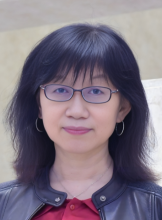
After receiving her B.Sc. from the Department of Agricultural Chemistry, National Taiwan University, Dr. Chern completed her PhD in Molecular and Cellular Biology at the University of Massachusetts Amherst,USA. She further received postdoctoral training in signal transduction at Harvard Medical School. Since then, Dr. Chern was first an assistant research fellow and later a distinguished research fellow at the Institute of Biomedical Sciences, Academia Sinica, Taiwan, for which she currently also serves as Director.
Furthermore, Dr. Chern was recently appointed Deputy Minister for the National Science and Technology Council in Taiwan and has received many prizes and awards for her research.
Dr. Chern’s research focuses on the functional characterization of the adesonine receptor and identifying novel therapeutic strategies for the treatment of neurodegenerative diseases such as Huntington’s disease and Alzheimer’s disease.
We are grateful that Dr. Chern took the time to answer our questions about her career trajectory, starting from her training in agricultural chemistry to her current position investigating neurodegenerative diseases. She also shared with us her insights on how neural dynamics on the macroscale and microscale may reciprocally influence each other, and lastly offered some important career advice for early-career researchers.
Simon R. Steinkamp (SRS): According to your CV, you originally trained in agricultural chemistry; how did you become interested in studying the nervous system, and the brain in particular?
Yijuang Chern (YC): My training in agricultural chemistry gave me a strong foundation in chemistry, biology, biochemistry, and molecular regulation. At that time, I was fascinated by how small molecules and signaling pathways could influence the behavior of living systems. As my research developed, I became increasingly interested in the nervous system, because the brain is perhaps the most complex and elegant example of biological regulation. What attracted me most was that the brain cannot be understood at only one level. A molecular change may alter receptor activity, affect cellular metabolism, reshape communication between neurons and glial cells, and eventually influence behavior and cognition. This multi-level complexity is scientifically challenging, but also very exciting.
My early work focused on adenosine receptors and signal transduction. Adenosine is a simple molecule, but in the brain it has broad effects on neuronal activity, metabolism, inflammation, sleep, and neuroprotection. Through this work, I became deeply interested in how molecular signaling contributes to brain function and brain disease. Interestingly, a small molecule that we identified several years ago, which inhibits adenosine transport and shows beneficial effects in models of neurodegenerative disease, was originally inspired by a Chinese herb. In this sense, my earlier training in agricultural chemistry did provide an important background for thinking about how natural molecules might help maintain brain homeostasis. Over time, this path led me from basic receptor biology to neurodegenerative diseases, brain imaging, and multiomics approaches.
SRS: Could you give us a layperson-friendly overview of your research? What are you trying to understand, and how do you study it?
YC: My laboratory studies why brain cells become vulnerable in neurodegenerative diseases, and whether this knowledge can be used to develop new therapeutic strategies. For many years, neurodegenerative diseases were considered mainly diseases of neurons. Neurons are certainly central to brain function, but we now know that other brain cells, including astrocytes, microglia, and oligodendrocytes, also play very active roles. These cells regulate energy metabolism, inflammation, myelin integrity, and the local environment that neurons need to survive. A central theme of our work is adenosine homeostasis. Adenosine is a small molecule that reflects the energy and stress state of cells. We are interested in whether restoring adenosine-related signaling can help protect the brain in diseases such as Alzheimer’s disease, and Huntington’s disease. To address these questions, we combine several approaches, including preclinical disease models, brain imaging, behavioral testing, molecular biology, single-cell and spatial analyses, metabolomics, lipidomics, and transcriptomics. In simple terms, we try to connect what we see at the whole-brain level with what is happening inside individual cell types. Our ultimate goal is to move from observation to mechanism, and most importantly, to intervention.
SRS: Much of your work focuses on neuronal dynamics at the microscale, for example, investigating receptor characterisation, and gene expression and regulation. Can you think of examples where findings from large-scale brain mapping have pointed researchers toward new molecular or cellular mechanisms? Or where discoveries at the microscale have fundamentally changed how we interpret patterns observed in macroscale brain imaging?
YC: This is a very important question. I believe some of the most exciting discoveries come from connecting the macroscale and the microscale. For example, brain imaging studies in neurodegenerative diseases often reveal changes in glucose metabolism, structural connectivity, white matter integrity, or functional networks before severe neuronal loss becomes obvious. These large-scale changes tell us that the disease is not only a problem of a single protein aggregate or a single cell type. They point us toward broader mechanisms, such as energy failure, impaired myelin maintenance, synaptic dysfunction, and glial activation. In our own work on tauopathy, imaging findings suggested early disruption of white matter connectivity. When we examined the brain at the molecular and cellular levels, we found that oligodendrocyte-related metabolism and lipid homeostasis were strongly involved. This changed how we interpreted the imaging signal. It was not merely a structural readout. The imaging signal also reflected underlying cellular and metabolic vulnerability.
The reverse is also true. Discoveries at the molecular level can change how we interpret imaging. For example, adenosine signaling and nucleoside transport affect cellular energy balance, inflammation, and sleep. With this knowledge, changes detected by fluorodeoxyglucose-positron emission tomography (FDG-PET), MRI, or connectivity-based imaging can be viewed not simply as consequences of degeneration, but also as readouts of altered metabolism and cell-cell communication. Therefore, I see brain imaging and molecular neuroscience as highly complementary. Imaging helps us identify system-level patterns, while molecular and cellular studies help us understand what produces those patterns.
SRS: Finally, what advice would you give to early-career researchers, especially to women pursuing a career in neuroscience?
YC: My first advice is to choose an important question that you truly care about. A scientific career is long, and there will always be difficult moments. Experiments fail, papers are rejected, funding is uncertain, and the field moves quickly. Curiosity and conviction are what help me continue when progress is slow.
Second, build a strong foundation, but do not be afraid to cross boundaries. My own path has taken me from agricultural chemistry to molecular biology, signal transduction, neuroscience, imaging, and multiomics. At each stage, I had to learn something new. Interdisciplinary work can feel uncomfortable at first, but it is often where new ideas begin.
For women in neuroscience, I would say this: do not underestimate yourself, and do not wait until you feel completely ready before taking the next step. Many excellent women are very self-critical. Confidence is not something we are born with. It is usually built through experience, preparation, and support from mentors and colleagues. It is also important to find good collaborators and mentors, and later, to become a mentor to others. A supportive scientific community can make a great difference.