A Conversation with Professor Angela Laird (OHBM 2026 Keynote Interview Series)
Interviewer: Rahul Gaurav
Editor: Ashley Tyrer
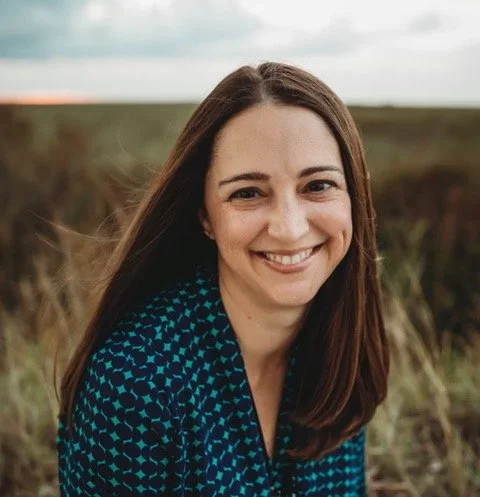
Professor Angela Laird is a Distinguished University Professor at Florida International University, Scientific Director of FIU Embrace, and Director of FIU’s Center for Imaging Science. Dr. Laird's research uses functional magnetic resonance imaging (fMRI) to understand the organization of large-scale networks in the human brain. She is the Director of the Neuroinformatics and Brain Connectivity (NBC) Lab, which focuses on developing novel data analysis algorithms, neuroscience informatics tools, and neuroimaging ontologies to yield analytic strategies for improving investigations into functional brain networks. Her current projects are examining changes associated with adolescent development, undergraduate science education, and addiction.
Professor Laird is widely recognized for her contributions to neuroimaging meta-analysis and neuroinformatics. Through the development of BrainMap and Activation Likelihood Estimation (ALE), her work has helped researchers synthesize findings across thousands of studies and develop a more cumulative understanding of brain function.
Ahead of her OHBM 2026 keynote lecture, we spoke with Professor Laird about her scientific journey, the origins of BrainMap, the evolving role of artificial intelligence in neuroscience, and her advice for the next generation of brain mapping researchers.
Rahul Gaurav (RG): Could you tell us a little about your academic journey, and how you first became interested in neuroimaging and brain mapping?
Angela Laird (AL): My background is in physics, and I have always been interested in problem solving. I studied medical physics at the University of Wisconsin, where there was a strong emphasis on fMRI and data analysis. I was fortunate that this path led me into neuroscience. Later, I moved to San Antonio, Texas, where I worked with Peter Fox in a medical school and radiology environment. That was also where much of my meta-analysis work developed.
RG: Much of the neuroimaging community associates your name with BrainMap and ALE. For readers who may be less familiar with these contributions, could you explain what problem you were trying to solve and why it became important for the field?
AL: BrainMap and meta-analysis emerged at a time when data sharing was very different from what it is today. In the early days of fMRI, researchers were not typically sharing full imaging datasets. What was available in publications were the reported x, y, and z coordinates of brain activations.
BrainMap was developed as a way to organize that information. By collecting coordinates reported across studies, it became possible to look for consistent patterns in the literature and identify areas of convergence across experiments. Even today, coordinate-based meta-analysis remains valuable because those coordinates are often available, even when the underlying imaging data are not. We are still having conversations about reproducibility and whether findings are replicable. Coordinate-based meta-analysis continues to provide a way of identifying consistent patterns across studies when access to full datasets is not available.
At the same time, the field has continued to evolve, with image-based meta-analysis, functional decoding, and resources such as Neurosynth providing new ways to synthesize and interpret findings across the literature.
RG: A recurring theme throughout your career has been helping researchers make sense of findings across thousands of studies. Today, the field is entering a new era of large-scale datasets, open science, and AI-assisted knowledge synthesis. What do you see as the biggest opportunities for building cumulative knowledge in human brain mapping?
AL: I think the potential that large language models have for the field of human brain mapping is incredible. The possibilities are immense, and in many ways the sky is the limit. We are already doing a lot of work in this area, and I am very excited about where it could lead.
At the same time, what we have learned so far is that these tools really need a human in the loop. You cannot simply ask an LLM to solve a massive problem on its own. Instead, researchers need to break problems into smaller pieces and work with the model step by step.
One example comes from a project I led through one of the very first BRAIN Initiative grants. My team spent nearly three years developing machine-learning tools to identify cognitive tasks from published fMRI studies. More recently, a colleague working with large language models was able to replicate much of that functionality in about an hour. That experience highlighted the extraordinary potential of these technologies to accelerate scientific progress.
The key caveat is that LLMs hallucinate. Researchers need to carefully guide, verify, and monitor the process. I believe these tools have tremendous potential, but they must be used responsibly, with human expertise remaining central throughout the workflow.
RG: Could you give us a preview of the main ideas you will discuss in your OHBM 2026 keynote?
AL: One of the themes of the keynote is understanding where the field has come from and how that history can help us address current challenges. I spend a considerable amount of time discussing the history of human brain mapping because I believe that understanding previous developments often provides valuable insight into present-day questions.
I will revisit topics such as resting-state fMRI and the debates that surrounded it in its early years, when many researchers questioned whether resting-state signals reflected meaningful brain organization or simply noise. Work comparing resting-state networks identified through independent component analysis with task-based networks derived from meta-analysis helped demonstrate that resting-state activity reflects meaningful functional architecture.
I will also discuss emerging directions in meta-analysis. While methods for synthesizing functional neuroimaging studies have matured over several decades, diffusion MRI and white matter research have lagged behind in this respect. These developments represent one of the areas I am most excited about sharing at OHBM this year.
RG: Looking back on your career, what advice would you give to early-career researchers who hope to make a lasting contribution to neuroscience and human brain mapping?
AL: This is probably the hardest question. One piece of advice I often give is to follow your gut and pursue the questions that genuinely spark your curiosity. Those interests frequently lead researchers toward important and unexpected discoveries.
At the same time, scientific careers require flexibility. Funding priorities change, research priorities change, and researchers need to adapt without losing sight of their core scientific interests. Some people pivot too much and simply chase the next fashionable topic, while others resist change entirely.
I think one of the most important skills for an early-career researcher is learning how to strike the right balance. You need to be flexible enough to adjust your research program when circumstances change, but not so flexible that you lose your scientific identity. Ultimately, you are balancing dedication to a scientific question with the long-term sustainability of your research career. Learning how to shift a little, but not too much, is a skill that will serve researchers well throughout their careers.
RG: Much of your work has involved bringing together ideas from different disciplines and research communities. What have collaborations taught you over the course of your career?
AL: I would not be where I am without collaboration. My entire career has been built on working with researchers from different disciplines and learning from people who approach problems in different ways.
One thing I have learned is the importance of listening. Different fields often use different vocabularies and ways of thinking about the same problem. Taking the time to understand those perspectives, read each other's work, and meet people halfway can lead to stronger and more productive collaborations.
Not every collaboration succeeds, but the best collaborations are those in which people genuinely invest the effort to understand each other's expertise and communicate effectively. For me, collaboration remains one of the most rewarding parts of science.