Interview with Dr. Meiqi Niu, 2025 Winner of the Karl Zilles Award
Author: Zaki Alasmar
Editors: Ashley Tyrer, Simon Steinkamp
Dr. Meiqi Niu is the newest recipient of the Karl Zilles Award in Integrative Neuroscience, which was created in 2022 to commemorate Karl Zilles’ foundational contributions to bridging neuroanatomy with multimodal in-vivo neuroimaging. The award highlights researchers who pursue integrative approaches, and in this year’s edition, for developing methods that connect microscopic anatomical features with macroscopic imaging signals, thereby enriching the field’s capacity to study the brain across multiple spatial scales.
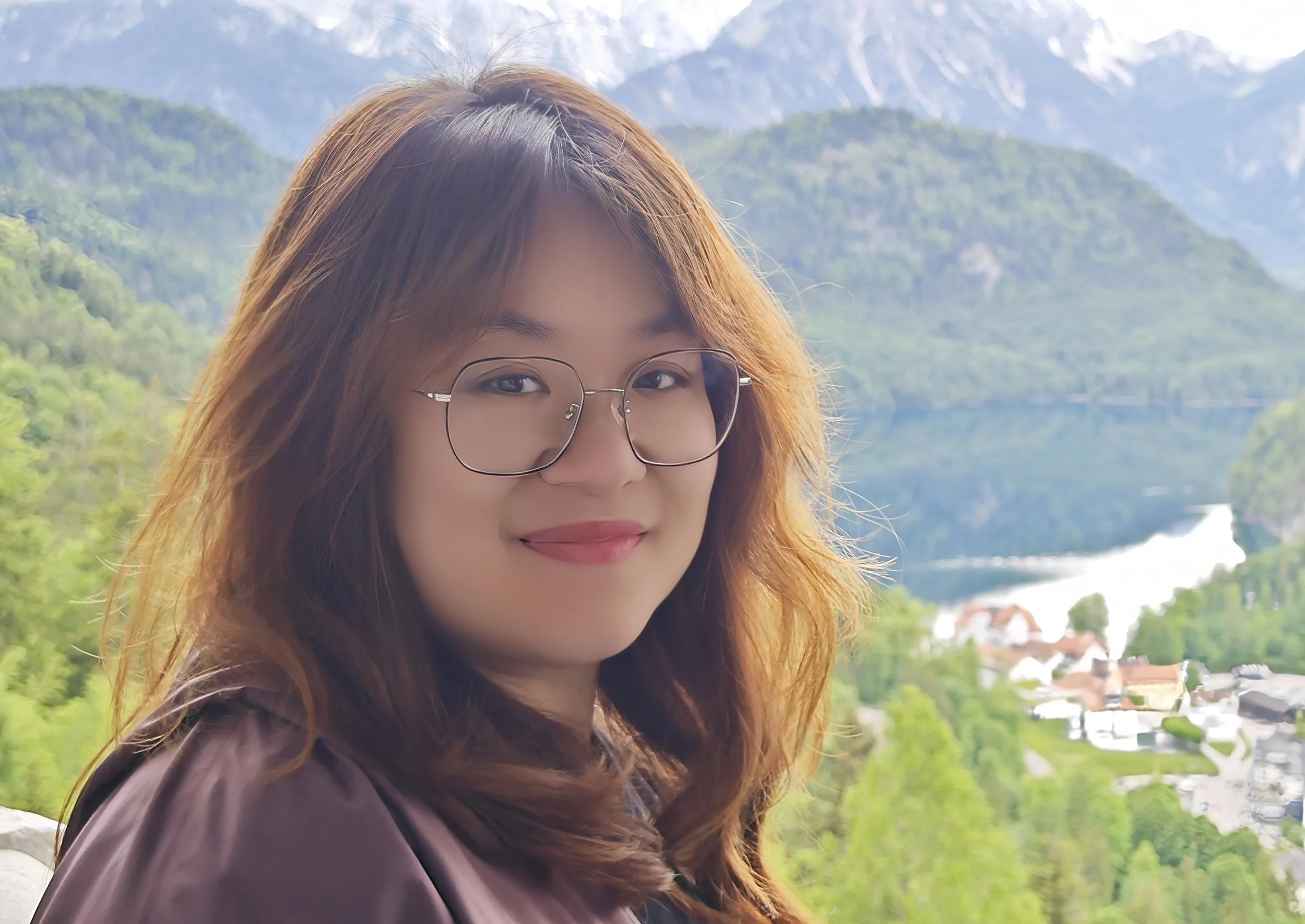
At the Institute of Neuroscience and Medicine at Research Centre Jülich, Dr. Niu’s research brings together advanced neuroanatomical mapping and multi-modal imaging to refine our understanding of brain organisation. By merging high-resolution structural insights from quantitative in vitro receptor autoradiography with diverse in-vivo imaging and tract-tracing techniques, her work strengthens the link between underlying microstructure and its manifestations in human neuroimaging, offering a mechanistic interpretation of brain architecture and function across scales.
Dr. Niu was also the runner up for the Human Brain Mapping Best Paper Award 2024, for her article entitled “Architecture and connectivity of the human angular gyrus and of its homolog region in the macaque brain”.
We had the privilege of interviewing Dr. Niu about her work in neuroimaging and her career journey so far.
Zaki Alasmar (ZA): What interesting experiences first sparked your curiosity about the brain and motivated you to pursue neuroscience research?
Dr. Meiqi Niu (MN): When I was very young, I was already fascinated by psychology and anatomy. I didn’t even know what “neuroscience” was at the time, I just thought studying the brain would be the coolest thing. When I was in middle school, I used to flip through my parents’ anatomy textbooks. The drawings were so beautiful that I even copied some of them by hand. But even then, and even after I started studying psychology in college, I hadn’t clearly decided that I wanted to do neuroscience.
The first turning point came when I took experimental psychology and statistics. I was amazed at how clever and creative people could be in designing experiments. It felt almost like doing physics, because you could actually measure and quantify things like perception, emotion, and decision-making. That was the moment I realized we can really study the mind scientifically, and I knew right away that this is exactly what I wanted to do.
During my master’s, I started working on neuroimaging and brain networks. That was when I realized that “real research” is not as straightforward as I had imagined. It is confusing, unpredictable, and at the same time very exciting. I still remember the first time I encountered multiple brain atlases and wondered why there were so many of them that didn’t perfectly match each other. I naively thought, “Maybe I should make my own detailed brain atlas someday.”
Later in my PhD, when I saw real brain slices for the first time and learned that I would draw a macaque parietal atlas from them, it immediately reminded me of myself in high school copying anatomy drawings. It felt like things had naturally come full circle.
So looking back, it wasn’t a single defining moment that led me here. It was more a series of small experiences and a steady curiosity that gradually drew me toward neuroscience. At some point, I just realized that this is the field that keeps me excited, curious, and motivated to keep exploring.
ZA: How have your international collaborations enriched your scientific perspective and influenced your decision to pursue the research path you follow today?
MN: Honestly, my international collaborations have influenced me a lot. When you work with scientists from different countries, you naturally get exposed to very different ways of thinking. People look at the same problem from different angles, and they bring in their own academic and cultural backgrounds. That really helped me see my own blind spots and understand the same scientific question from multiple perspectives.
Another thing is that collaborating internationally makes science feel much more “alive”. Instead of only reading papers, I get to talk directly with others about what they’re working on, why they use certain methods, and what difficulties they run into. These kinds of conversations gave me a lot of inspiration and helped me quickly see which questions are really interesting or still unresolved. And by working with labs from different fields, I learned how to combine multiple perspectives, which I think is essential when we study something as complex as the brain.
Most importantly, these experiences made me realize how much I enjoy working in interdisciplinary and cross-cultural teams. They also helped me recognize that I want to become a researcher with an international outlook, someone who values close collaboration across different disciplines.
ZA: In your words, what does it mean to be a neuroscientist?
MN: I think being a neuroscientist is both really enjoyable and very challenging.
The great thing is that you get to explore one of the most complex and fascinating organs in the body. Along the way, you can learn a lot and meet like-minded people, which makes the journey really rewarding.
At the same time, it’s extremely challenging. The brain is so complex that it can’t be studied from a single perspective, so you need to approach it across scales and disciplines. That requires strong learning skills, the ability to think from multiple angles, adaptability to fast developments, and good communication and collaboration skills. You also need to be able to handle stress and setbacks. Experiments can be confusing, frustrating, or even fail, but the excitement of discovering something new and understanding even a small part of the brain keeps you going.
In short, I think there are two qualities that are most important: openness and persistence. Openness to perspectives different from your own, and persistence in following your curiosity and pursuing what you believe is meaningful and correct.
ZA: What unanswered question(s) in our field do you think you’ll pursue next/are you most excited about?
MN: I’ve been really interested in a pretty fundamental question in neuroscience, which is how brain structure relates to function. I’ve looked at it from different modalities and scales, from the histological features, molecular organization, functional connectivity, and even comparing homologous regions across species.
One thing I haven’t really explored much is the white matter directly, even though a lot of my work involves connectivity and networks. So next, I want to bring together gray matter and white matter features to get a more complete picture of structure-function relationships. I’m thinking of focusing on specific networks and seeing how detailed structural features support their function. I feel this approach will make the story much clearer and help us better understand how the brain works.