Interview with Prof. Jack Van Horn, 2025 Winner of the Education in Neuroimaging Award
Author: Simon Steinkamp
Editors: Zaki Alasmar, Ashley Tyrer
The 2025 OHBM Education in Neuroimaging Award was awarded to Prof. Jack Van Horn at the annual meeting in Brisbane, Australia, honouring his involvement and commitment to teaching neuroimaging methods.
Prof. John Darrel Van Horn is a full professor of Psychology at the College of Arts and Sciences and a Quantitative Foundation Distinguished Professor of Data Science at the School of Data Science at the University of Virginia, Charlottesville (USA).
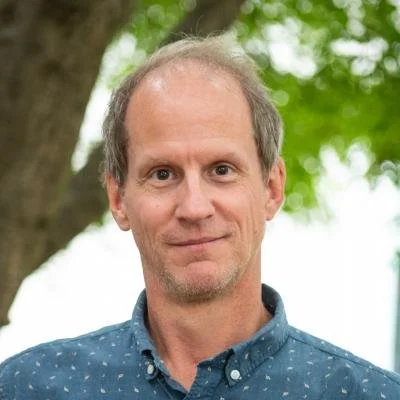
He completed his Bachelor’s in Psychology at Eastern Washington University (USA) and went on to complete a PhD in Psychology at the Department of Psychology, University of London (UK). Additionally, he completed a Master’s degree in Engineering at the University of Maryland (USA). His distinguished career has included stays as faculty at Dartmouth College, the University of California Los Angeles, and University of Southern California.
Prof. Van Horn’s work, which combines multi-modal neuroimaging data with multivariate statistical modelling, emphasises that modern neuroscience relies heavily on advanced data-driven approaches. He believes that it is of vital importance for scientists to construct new databases, employ high-performance computing, develop efficient algorithms, and apply novel mathematical tools, to enable a deeper understanding of the human brain, and ultimately, what makes us human.
Throughout his career he has been heavily involved in educating the next generation of neuroscientists, and has contributed to and developed up many graduate and undergraduate courses on neuroscience and brain mapping, including one of the first full one-year Master’s programs combining neuroimaging and informatics in the US.
Furthermore, Prof. Van Horn has been a longstanding member of the OHBM community, was named a fellow of OHBM in 2020, and has served the Organization in many leadership roles. He is also currently a member of the OHBM Scientific Advisory Board.
We had the privilege of interviewing Prof. Van Horn about his thoughts and experiences in education in the field of neuroimaging, and the current research climate.
Simon Steinkamp (SS): What sparked your interest in teaching and education, combining both aspects of data science, psychology, and neuroimaging?
Jack Van Horn (JVH): Engaging with students has been awesome and passing on knowledge from many years in the neuroimaging trenches has been something I have found enormous personal value in. Providing instruction to undergraduates and mentorship to young investigators and seeing them “get it” is highly rewarding. Especially in neuroimaging, where we are often dealing in very large data sets. Throughout the history of human brain mapping, we just don’t collect “less” neuroimaging data – we always seem to be collecting more. Consequently, ensuring that students understand the concepts behind data acquisition but also data processing workflows, computational methods, limits on inference, and the importance of Open Science, is just really important for making sure that students understand the whole neuroimaging lifecycle.
SS: Do you have your own philosophy for teaching? And what shaped you as an educator?
JVH: Always strive to treat students with respect and patience — it will pay dividends. This notion has proven helpful in countless instances and has helped me to craft my teaching philosophy.
SS: How does teaching affect your own research?
JVH: I greatly enjoy discussing new research ideas with students. They are so often curious, ask great questions, and challenge my assumptions. What a treat it is to have those conversations!
SS: What do you see as qualities of effective teaching?
JVH: The thing I have learned over many years of teaching is that there are many strategies which can successfully help students effectively understand complicated topics like neuroimaging. These might range from being a cheerleader to being much more technical and mathematical. Irrespective of one's persona or choice of teaching styles, the key is to communicate to students your love of the topic area, why it gets you out of bed in the morning, and why you believe it to be the most exciting and fulfilling area of research ever! Tell stories about how you came to learn the materials. Discuss your own struggles, mistakes, and miscues. I have certainly learned more about how to analyze neuroimaging data from what I did wrong than from what I did right! Share those experiences with students, but communicate your excitement about your own neuroimaging journey. Students will appreciate it and, as a consequence, learn.
SS: What major obstacles to advancing science education at both national and global levels have you encountered, and how have you addressed or adapted to these challenges, particularly in the current climate?
JVH: We find ourselves facing enormous challenges in science and education which will demand that we be creative, resilient, and mindful in how we react. In the US these challenges are made evident in every news headline. Universities and research integrity is under threat. This is and will likely have negative effects on education both in the US and around the world. How we respond to these challenges will be vital for the future of the field. This is especially true for encouraging the broadest possible participation in brain mapping science. OHBM is in a unique position to promote local and global educational efforts, hackathons, seminars, and student-centered programs. As further hurdles present themselves, I can be counted on to support the OHBM’s educational mission and how we can educate students and trainees at our annual meeting, through SIGs, and other communities!